Mental Health and Sleep: The Impact of Poor Sleep on Mental Health
Sleep is more than rest. It’s one of the strongest foundations of emotional and mental well-being. Research shows that people who struggle with sleep are far more likely to experience mental health challenges. According to the Centers for Disease Control and Prevention (CDC), 1 in 3 adults in the United States does not get enough sleep. Another study published in Nature Human Behaviour found that poor sleep quality significantly increases the risk of anxiety and mood disorders.
These findings highlight a simple truth: sleep and mental health are deeply connected, and when one is affected, the other usually suffers. Understanding this relationship helps us take meaningful steps to protect both our emotional health and our nightly rest.
The Science Behind Sleep and the Brain
To understand the connection between sleep and mental health, it helps to know what happens in the brain while we sleep. When you fall asleep, your brain cycles through different stages, including light sleep, deep sleep, and REM (rapid eye movement) sleep. Each stage plays a unique role in supporting mental function:
- Deep sleep allows the brain to clear waste, repair cells, and reset your nervous system.
- REM sleep is essential for emotional regulation, creativity, and memory processing. This is when your brain works through feelings, organizes thoughts, and stores new information.

During quality sleep, the brain balances important chemicals like serotonin, dopamine, and cortisol, neurotransmitters that influence mood, motivation, stress, and emotional stability.
When sleep is disrupted, these processes break down. The brain struggles to regulate emotions, process memories, and manage stress. This is why even one poor night of sleep can make you feel more reactive, overwhelmed, or unfocused. Over time, lack of sleep can lead to deeper mental health concerns.
The Impact of Poor Sleep on Mental Health
When sleep quality drops, the brain struggles to function at its best. Emotional stability weakens, stress responses intensify, and everyday tasks feel more overwhelming. Over time, poor sleep can become a major contributor to mental health issues and in many cases, it can even trigger new problems that were not present before. Below are the main ways sleep deprivation affects mental and emotional well-being.
1. Decreased Memory, Concentration, and Cognitive Function
Sleep plays a major role in how the brain processes information. During deep and REM sleep, your brain organizes memories, strengthens neural connections, and prepares for next-day learning. When sleep is interrupted:
- Short-term memory becomes unreliable
- Focus and attention drop
- Problem-solving and decision-making become harder
- Reaction times slow down
- Learning new information takes more effort
People often describe themselves as feeling “foggy,” “unfocused,” or “mentally slower” after nights of poor sleep. This can affect work performance, academic success, and even daily conversations.
2. Reduced Motivation, Energy, and Enjoyment
Good sleep restores the body’s physical and emotional energy. Without it, even small tasks feel draining. You may notice:
- A lack of motivation to complete responsibilities
- Lower physical stamina
- Loss of interest in hobbies or social activities
- Difficulty feeling joy or excitement
Over time, this emotional dullness sometimes called “anhedonia”—can resemble the early stages of depression. What starts as simple tiredness can quickly become a deeper emotional struggle.
STAY UPDATED WITH THE BEST VIETNAMESE
Sign up for our newsletter to get the latest reviews, exclusive deals, and special offers right in your inbox.
3. Increased Irritability and Emotional Reactivity
Sleep helps regulate the brain’s emotional centers, including the amygdala and prefrontal cortex. When sleep is lacking, these areas become more sensitive and less controlled. This leads to:
- Feeling irritated more easily
- Quick emotional reactions
- Trouble staying calm during conflict
- Difficulty handling stress
A minor inconvenience like traffic or a slow email response may suddenly feel overwhelming. Poor sleep reduces your ability to cope with everyday life, making emotional balance much harder.
4. Heightened Anxiety and Worry
One of the strongest links between mental health and sleep is the relationship between insomnia and anxiety. Research shows that sleep deprivation makes the brain more alert and reactive, which intensifies anxious thoughts. People may experience:
- Racing thoughts at night
- Restlessness and physical tension
- Overthinking or spiraling worry
- Sudden feelings of panic
- Difficulty “shutting off the mind”
This becomes a vicious cycle: anxiety makes it hard to fall asleep, and lack of sleep increases anxiety the next day.
5. Stronger Risk of Depression

Sleep affects key chemicals like serotonin, dopamine, and norepinephrine neurotransmitters that influence mood and emotional stability. When sleep is poor:
- Mood becomes unstable
- Negative thoughts feel stronger
- Emotional exhaustion increases
Chronic insomnia is one of the strongest predictors of developing depression. People already diagnosed with depression often see their symptoms worsen when sleep is disrupted.
6. Impulsive or Risk-Taking Behavior
The prefrontal cortex, the part of the brain responsible for planning, judgment, and self-control is greatly affected by poor sleep. Without proper rest, people may:
- Make impulsive decisions
- Take more social, financial, or physical risks
- Struggle to think about consequences
- Engage in unpredictable or erratic behavior
This pattern is especially common among teenagers and young adults, but it can affect anyone who is consistently sleep-deprived.
7. Heightened Stress Response and Physical Symptoms
Sleep regulates cortisol, the body’s main stress hormone. When sleep is disrupted, cortisol levels stay high, leading to:
- Constant feelings of stress
- Headaches
- Muscle tension
- Digestive issues
- Faster heart rate
Over time, chronic stress weakens the immune system and increases vulnerability to illness. This physical burden further worsens emotional well-being.
8. Worsening of Existing Mental Health Conditions
If someone already struggles with a mental health condition, poor sleep often makes symptoms more intense:
- Anxiety disorders → more panic, restlessness, and fear
- Depression → more fatigue, hopelessness, and emotional numbness
- PTSD → more nightmares, flashbacks, and hypervigilance
- ADHD → more distractibility, impulsivity, and restlessness
- Bipolar disorder → sleep changes can trigger mood episodes
This is why treating sleep problems is often a crucial part of managing mental health conditions.
9. Social Withdrawal and Relationship Strain
When someone is sleep-deprived, they may become more withdrawn, less patient, and less connected emotionally. This can lead to:
- Avoiding social interactions
- Miscommunication
- Conflict with friends or family
- Reduced intimacy in relationships
Fatigue can make even loved ones feel like too much effort.
10. A Downward Cycle of Declining Well-Being
Perhaps the most harmful part of poor sleep is the cycle it creates:
Bad sleep → poor mental health → even worse sleep.
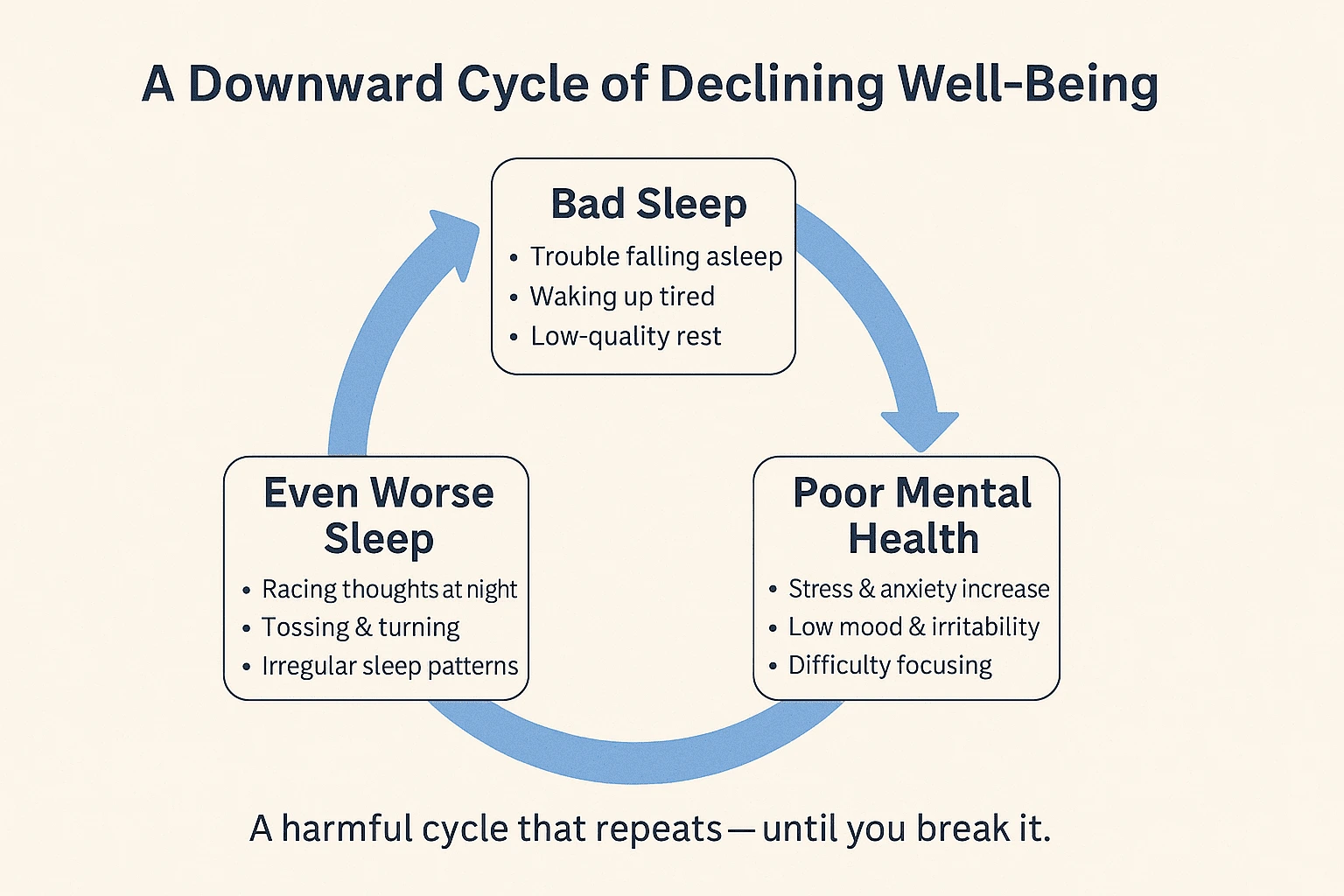
Without intervention, this cycle can continue for weeks, months, or even years. But the good news is that improving sleep often leads to rapid improvements in mood, energy, clarity, and emotional stability.
Healthy Sleep Habits to Support Mental Health
Improving sleep is one of the most effective ways to support mental well-being. Here are practical sleep habits that can make a real difference:
Create a Consistent Sleep Schedule
Go to bed and wake up at the same time every day, even on weekends. This strengthens your internal clock and improves sleep quality.
Build a Calming Night Routine
Prepare your body for rest with relaxing activities such as:
- Light stretching
- Warm showers
- Reading
- Deep breathing exercises
Avoid stimulating tasks right before bed.
Limit Screen Time
Phones, laptops, and TVs emit blue light, which tells your brain to stay awake. Try to avoid screens at least one hour before bedtime.
Make Your Sleep Environment Comfortable
A supportive mattress, cool temperature, low light, and quiet surroundings all contribute to better rest.
Be Mindful of Caffeine and Alcohol
Caffeine stays in your system for hours, making it harder to fall asleep. Alcohol may help at first, but it reduces REM sleep and makes you wake up more often.
Move During the Day
Exercise helps reduce stress and improves both mood and sleep quality. Even a 20-minute walk can make a difference.
Practice Mindfulness or Meditation
These techniques help calm the mind, lower anxiety, and prepare your body for rest.
When to Seek Professional Support
Sometimes, improving sleep habits isn’t enough, especially when sleep problems are tied to deeper emotional or physical issues. You should consider seeking professional help if:
- Sleep problems last more than a month
- You often wake up feeling unrefreshed
- You rely on sleep aids or alcohol to fall asleep
- Anxiety or depression symptoms get worse
- Difficulty sleeping affects work, relationships, or daily life
Mental health professionals, primary care providers, and sleep specialists can identify underlying causes and create a personalized treatment plan. Early support can prevent long-term problems and help you feel better faster.
Your Reliable Mental Health & Sleep Support With TrueCare Medical (Lilburn & Suwanee, GA)
If you’re struggling with the connection between sleep and mental health, you don’t have to navigate it alone. At TrueCare Medical, patients receive compassionate, reliable care from experienced providers who understand how closely mental health and sleep are linked.
Whether you’re dealing with anxiety, depression, chronic stress, or persistent sleep difficulties, TrueCare Medical offers:
- Comprehensive mental health evaluations
- Sleep-related health assessments
- Personalized treatment plans
- Ongoing support and follow-up care
With clinics in Lilburn and Suwanee, Georgia, TrueCare Medical focuses on improving both physical and emotional well-being. You can learn more or schedule an appointment at:
https://truecaremed.net/ Taking the first step toward better sleep may also be the first step toward better mental health.
Contact Us Today For All Your Health Care Needs!
Conclusion
The connection between mental health and sleep is undeniable. When one is affected, the other often suffers. But the good news is that improving your sleep can lead to meaningful improvements in mood, focus, energy, and overall well-being.
By understanding how sleep affects the brain, adopting healthy sleep habits, and seeking professional help when needed, anyone can begin building a healthier, more balanced life. Better sleep leads to better mental health and both are worth prioritizing.